
Last updated October 15, 2026
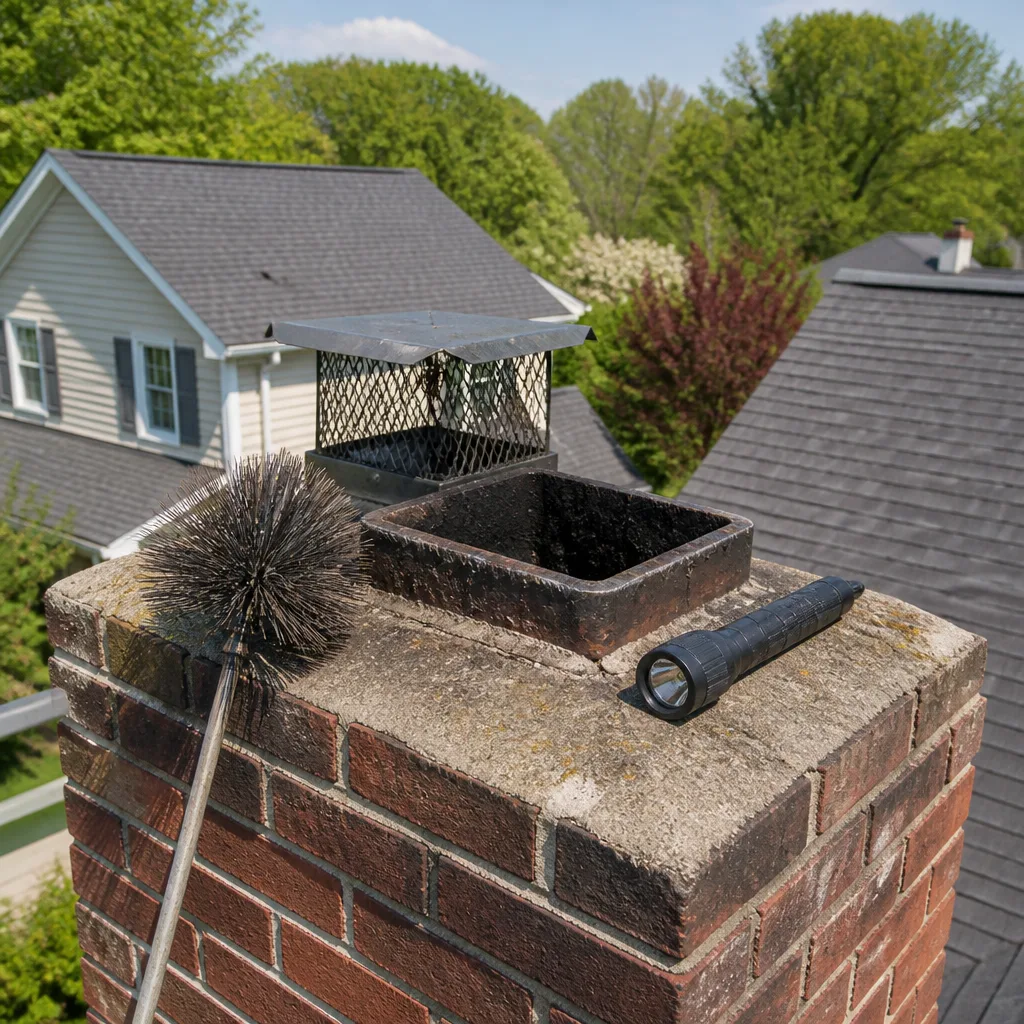 Sweep & inspection
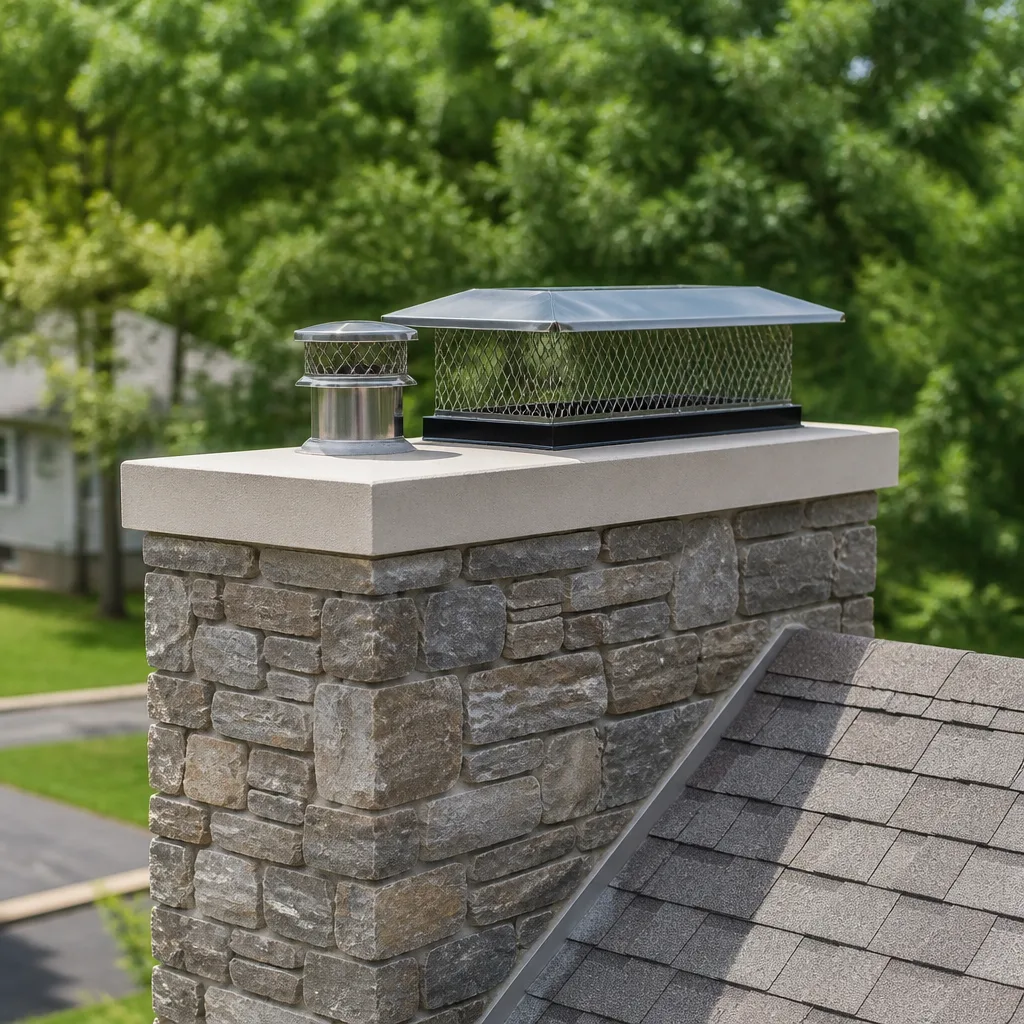 Caps & crowns
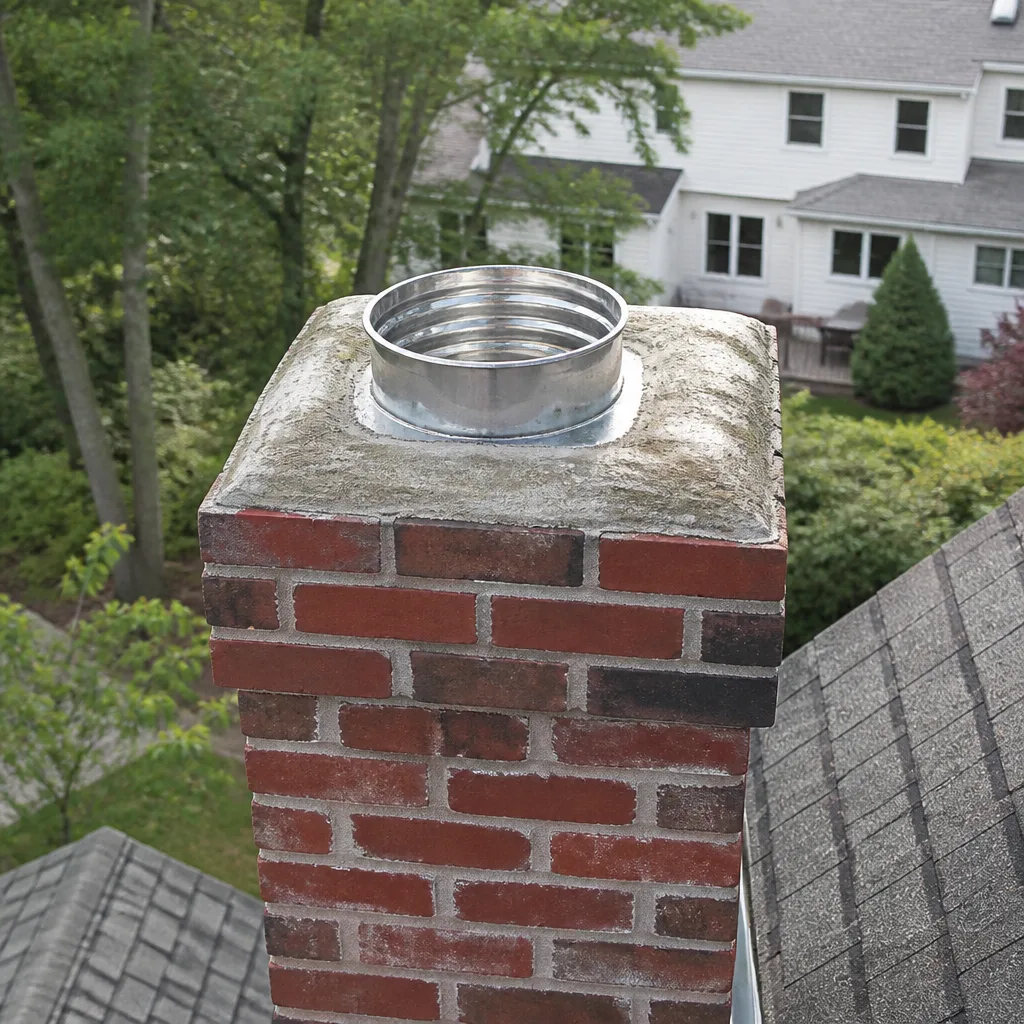 Flue relining
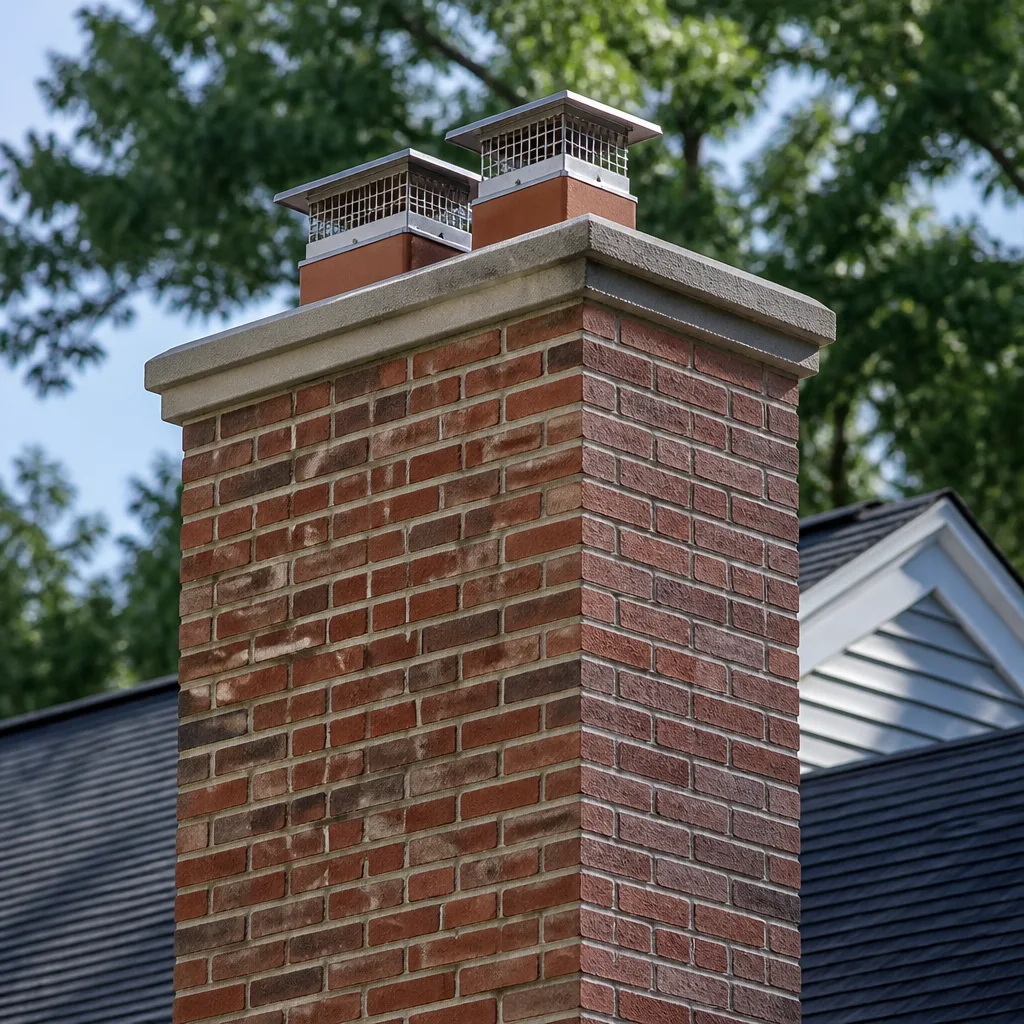 Masonry repair
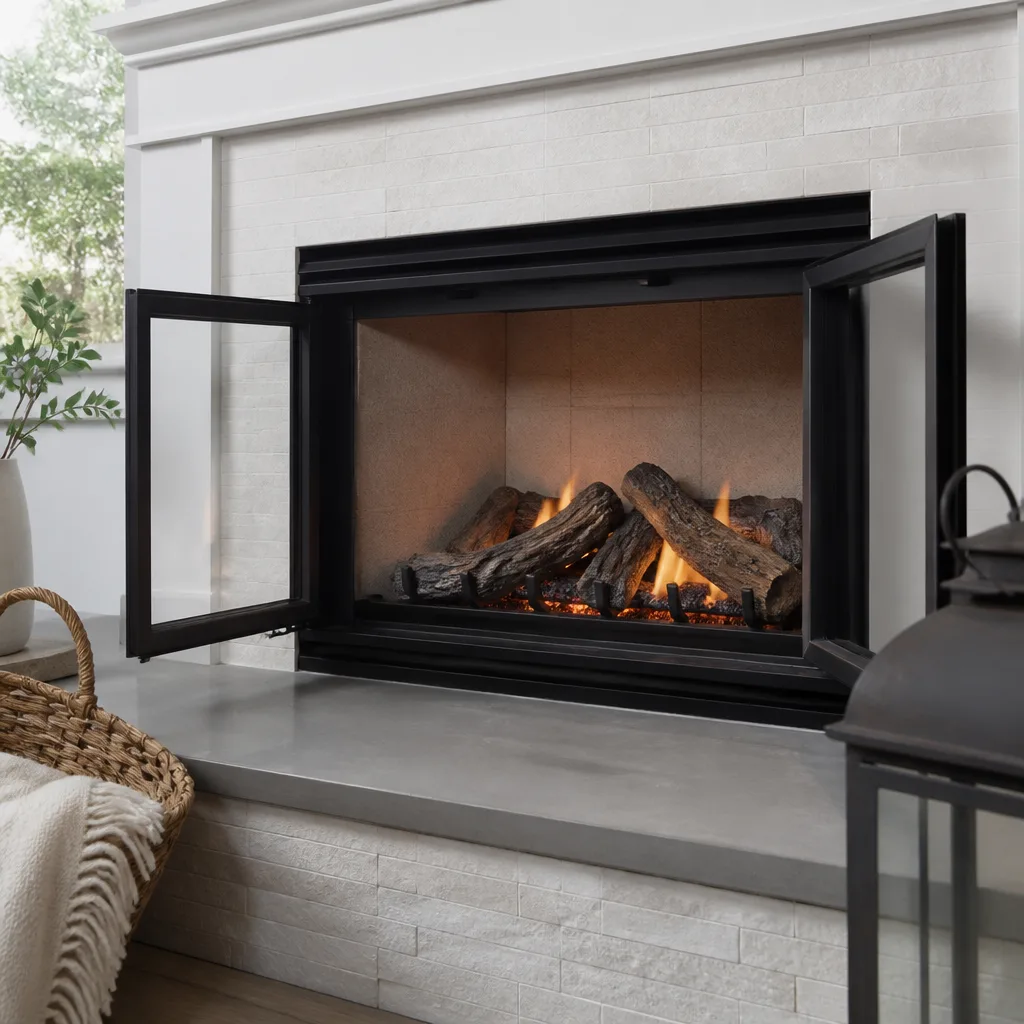 Gas fireplace service
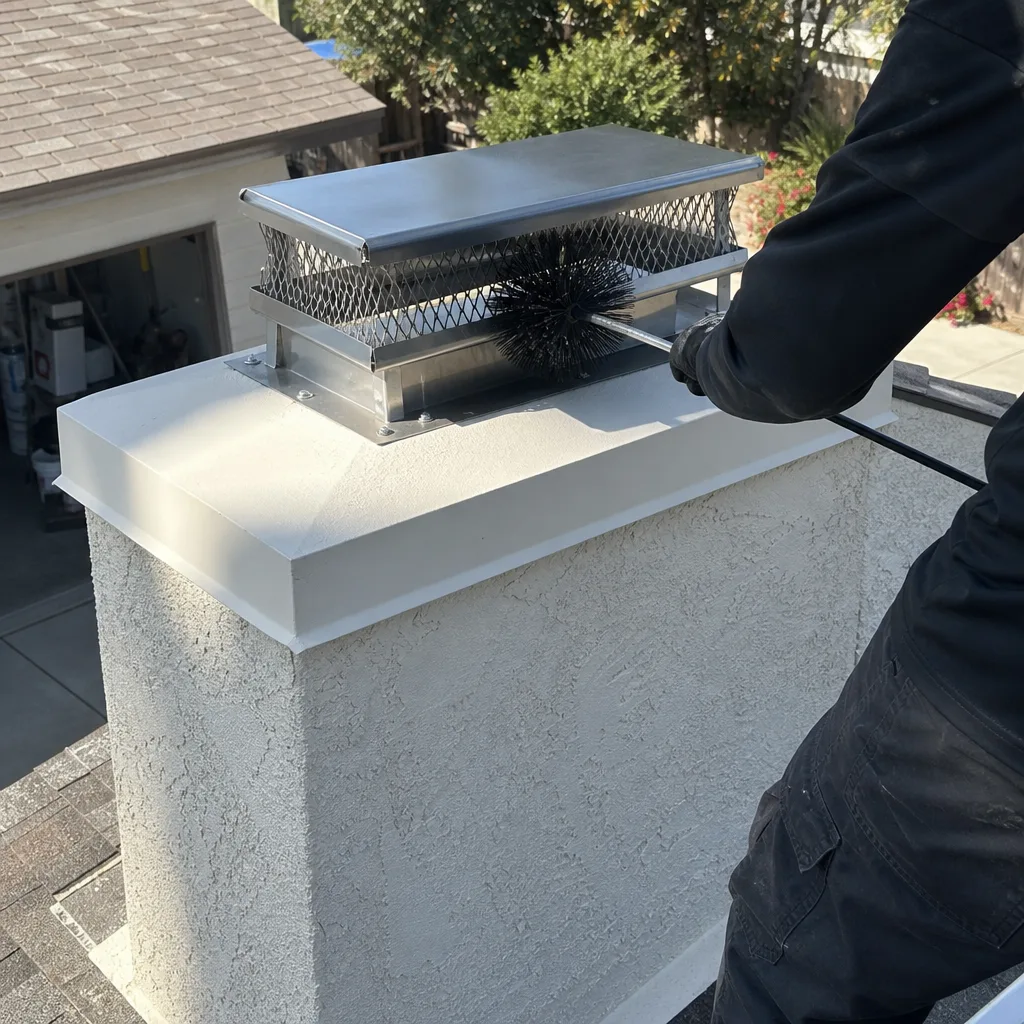
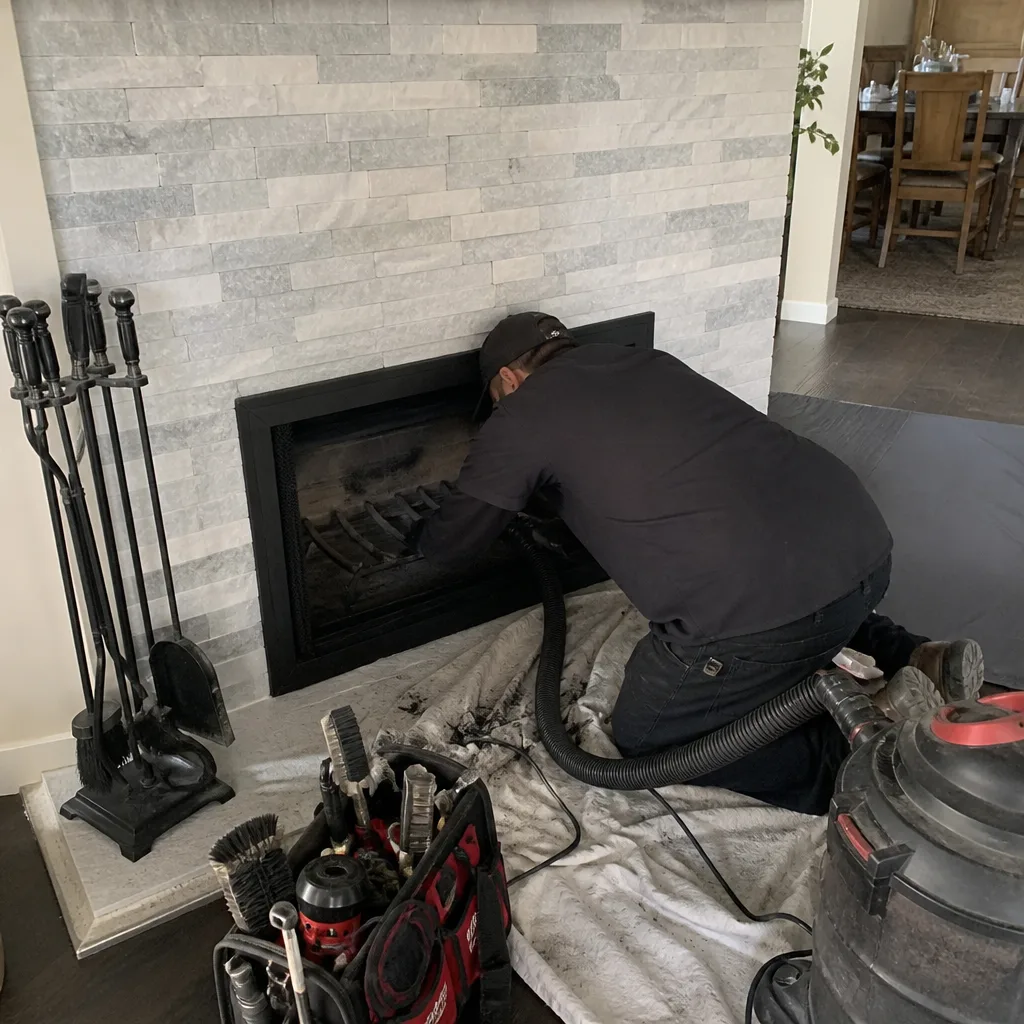
Level 1 sweep and inspection to the NFPA 211 annual standard - flue, crown, cap, and flashing checked and photographed
Chimney sweep logs do not sweep chimneys. They loosen some creosote - which then falls where a brush and vacuum still have to collect it.
Chimney Sweep Maintenance Checklist for Fresno Homeowners
A checklist that just says “inspect your chimney annually” is the maintenance equivalent of “eat healthier” – technically correct, completely useless. What you actually need is to know what normal looks like at every point from the firebox to the chimney cap, and what changes in those visuals mean for your Fresno home. This guide gives you the specific visual and sensory checkpoints that reveal real problems before they become expensive ones, with seasonal triggers that matter in the San Joaquin Valley, not generic advice written for a homeowner in Vermont.
Here’s what to actually check, what it should look like, and what it means when it doesn’t.
Quick Answer
A complete chimney maintenance checklist for Fresno homeowners starts at the firebox and works up through the damper, smoke chamber, flue, and cap, checking each point for creosote buildup, moisture staining, rust, mortar deterioration, and animal activity. The most important checks happen after specific Fresno weather events – the first fall burn, any Santa Ana wind episode, and the end of a long idle summer – not just on a calendar date. A standard chimney sweep in Fresno typically runs $189 – $289 before any repairs, and any home that burns wood more than twice a month should be swept annually at minimum.
Styles & brands we work with
Table of Contents
- The Ground-Up Inspection Sequence
- What Normal Looks Like at Each Checkpoint
- Fresno Seasonal Triggers That Matter More Than the Calendar
- Cosmetic Issues to Photograph vs. Structural Signals That Need a Pro This Week
- Using Your Nose and Ears as Diagnostic Tools
- The 5-Minute Maintenance Log That Could Save You Thousands
- Creosote 101: The Buildup That Causes Most Fresno Chimney Fires
- What You Can Safely Check Yourself vs. What Requires a Trained Professional
The Ground-Up Inspection Sequence
Most checklists start at the top of the chimney and work down. That’s backwards for a homeowner. You can’t see the cap from inside your living room, but you can see everything that matters at eye level, and the condition of the firebox tells you what’s likely happening higher up. We recommend working from the firebox upward because damage travels that direction: water enters at the top, creosote forms from the bottom, and the two meet in the middle where problems compound.
Step 1: The Firebox (Where the Fire Actually Burns)
Open the glass doors or screen. Look at the floor of the firebox, the back wall, and both side walls. In a healthy fireplace, firebrick will be a uniform tan-to-reddish color with hairline cracks no wider than a credit card. The mortar joints between bricks should be intact, not crumbling or missing in chunks. If you see white, chalky staining on the brick – especially in a pattern that looks like dried salt – that’s efflorescence, and it means water is moving through masonry. In Fresno, where we get most of our rain in a few intense winter weeks, efflorescence is one of the earliest visible signs that you need a professional look at the crown and cap before the next wet season.
Step 2: The Damper (The Metal Door Above the Fire)
Look up from the firebox. You’ll see the damper plate – a cast-iron or steel flap that opens and closes the flue. Is it open? Is it rusted? A damper that won’t close tightly lets conditioned air escape your Fresno home in summer and winter, and it’s one of the most common reasons homeowners notice a draft when the fireplace isn’t in use. Rust on the damper means water is getting past the chimney cap or crown. Surface rust on a damper is a cosmetic issue you can photograph. A damper that’s warped, cracked, or seized in the open position is a functional problem that needs repair before your next burn.
Step 3: The Smoke Chamber (The Funnel Above the Damper)
This area is visible when the damper is open – look for the angled brick transition where the firebox narrows into the flue. In an older Fresno home, especially those built before 1980, the smoke chamber is often unlined or has gaps at the brick joints. Those gaps accumulate creosote, and because the smoke chamber is the hottest part of the chimney during a fire, it’s a prime ignition point for chimney fires. You can’t safely inspect this area yourself without the right equipment and lighting, but you can note whether you see any visible debris or flaking material when you shine a bright flashlight up from the firebox.
Step 4: The Flue (The Vertical Duct That Carries Smoke Out)
From inside the firebox, you’ll only see the first few feet of flue. That’s enough for a basic visual check. The flue liner – typically clay tile in older homes, often stainless steel like Chimney Sweep in Fresno pros install in newer ones – should look continuous, with no gaps or visible cracks. If you have a clay tile liner and you see pieces of tile sitting in the firebox, that’s a serious structural signal, not a cosmetic one. It means the liner is actively deteriorating, and you need a professional chimney inspection before using the fireplace again.
Step 5: The Chimney Cap and Crown (Top of the Chase, Visible from Outside)
Go outside and look up. The chimney cap is the metal cover at the very top – some are simple screens, some are hooded caps with side vents. The crown is the concrete or mortar slab at the top of the masonry structure. You’re looking for: a cap that’s present (missing caps are the number one reason animals get in), a cap that’s not rusted through, and a crown that isn’t cracked. Fresno’s freeze-thaw cycle is mild compared to places like Truckee, but our summer heat bakes masonry and our winter rains exploit every hairline crack. A cracked crown is a structural signal. Water that gets into the crown works its way down through the masonry and causes spalling, efflorescence, and eventually flue liner damage.
What Normal Looks Like at Each Checkpoint
You can’t catch abnormal if you don’t know normal. Here’s a reference for what a healthy, well-maintained chimney in Fresno looks like at each point in the inspection sequence.
Firebox
- Normal: Firebrick is intact, joints are solid, no loose bricks. Light soot is fine. A fine gray ash layer on the floor is normal after burning.
- Abnormal: Crumbling mortar you can scrape with a key, bricks that wiggle when pressed, white crystalline staining, or a thick, dark, glossy coating on the walls – the glossy coating is creosote that’s reached Stage 3, the most dangerous form.
Damper
- Normal: Moves freely, seats properly when closed, no visible gaps around the edges when shut. Light surface rust is cosmetic.
- Abnormal: Stuck open, stuck closed, or so rusted that the metal has lost its structural integrity – pitting, flaking, or holes.
Smoke Chamber
- Normal: The angled transition looks uniform, without debris accumulation visible from the firebox.
- Abnormal: Visible creosote stalactites (yes, it looks exactly like it sounds), flaking material falling into the firebox, or visible gaps at the brick joints.
Flue Liner
- Normal: Continuous and smooth, whether clay tile or stainless steel. A thin layer of dull black soot is normal; it’s the shiny, tarry buildup you’re watching for.
- Abnormal: Cracked tile, missing tile pieces in the firebox, rust on a metal liner, or liner separation at the joints.
Cap and Crown
- Normal: Cap is present and intact, screen is unobstructed, crown has no visible cracks from ground level.
- Abnormal: Missing cap, rusted-through cap, crown cracked in a pattern that looks like a dry lakebed, or visible water staining on the chimney exterior below the crown line.
Fresno Seasonal Triggers That Matter More Than the Calendar
National chimney maintenance guides tell you to inspect in the fall and that’s fine, but Fresno’s climate doesn’t follow a generic calendar. Here are the triggers that actually matter in the Central Valley.
After the First Burn of Fall
Your first fire of the season is the most informative burn you’ll have all year. As the flue warms, it expands, and you may notice things you didn’t see during the summer. Pay attention to: any smell of burning plastic or electrical insulation in the first 15 minutes, smoke spilling into the room rather than drawing up the flue, and an unusually long startup time for the draft to establish. Each of these points to a different problem – creosote buildup restricting the flue, a blocked cap, or negative air pressure in the house.
After a Santa Ana Wind Event
Santa Ana winds hit Fresno a few times each fall, and they do something specific to chimneys: they drive dry air down the flue and out through the masonry. If you have a chimney cap that’s damaged or missing, a Santa Ana event can deposit a shocking amount of debris – leaves, dust, and sometimes nesting material – directly into your flue. After a strong wind event, go outside and check for: debris hanging from the cap or screen, any visible shifting of the cap itself, and accumulated material at the firebox level. A blocked flue from wind-deposited debris is invisible from the ground and can cause smoke to back up into the house on your next burn.
After a Long Fresno Summer
Fresno’s hottest months are idle months for most fireplaces, and that idle time has a specific consequence: animals move in. Birds, squirrels, and raccoons find a cool, protected chimney shaft as attractive as you find your air-conditioned living room. The problem isn’t just the nest – it’s that a nest presses against the flue liner and traps creosote beneath it, creating both a blockage and an ignition risk. When fall arrives and you light the first fire, a bird’s nest in the flue can become a chimney fire in minutes. If you hear scratching in the chimney during the summer, don’t wait for fall. Call a Chimney Inspection in Fresno professional who can remove the nest and cap the chimney properly.
After Heavy Winter Rain
Fresno gets most of its rain between December and March, and it often comes in concentrated bursts. After any heavy rain event, check your chimney from the outside: fresh efflorescence on the brick, water stains on interior walls or ceilings near the chimney chase, and a musty smell from the firebox. All three point to water intrusion, and water is the number one structural threat to masonry chimneys in the Central Valley – more than creosote, more than animals.
Cosmetic Issues to Photograph vs. Structural Signals That Need a Pro This Week
One of the biggest frustrations homeowners share with us is being told they need major work on what looks like a minor issue. The flip side is equally dangerous: a real structural problem that goes unaddressed because it looks “fine” to the untrained eye. Here’s how to tell the difference.
Photograph and Monitor (Cosmetic)
- Light surface rust on the damper – not pitted or flaking, just discoloration. Photograph it, check it again in six months.
- Hairline cracks in the crown – narrower than a dime. These are worth sealing at your next sweep, but they’re not an emergency in most Fresno homes.
- Light efflorescence – the white chalky stuff, if it’s a thin layer with no visible cracking or spalling.
- Smoke staining on the firebox walls – dark streaks that wipe away with a dry brush. This is normal for any fireplace that’s been used consistently.
- A damper that sticks slightly – functional but needs lubricant. Note it, mention it at your next service call, don’t lose sleep over it.
Call This Week (Structural)
- Missing or cracked flue liner tiles – if you can see exposed brick behind where tile should be, or tile pieces in the firebox, stop using the fireplace and call. A damaged liner can allow fire to reach the home’s framing – and we know how quickly dry Fresno wood burns.
- Efflorescence with spalling – when bricks are flaking off in layers (spalling) alongside the white staining, water has already caused material damage, and it accelerates quickly.
- The smell of smoke inside the house when the fireplace is NOT in use – this means the chimney is drawing, but in the wrong direction, and it can pull carbon monoxide into the house. Call today.
- A damper that’s seized closed or wide open – a closed damper means you can’t use the fireplace safely; an open one is a carbon monoxide risk on a still day.
- Visible creosote that’s shiny or tarry – Stage 3 creosote is a fire hazard that requires professional removal with tools and techniques that homeowners shouldn’t attempt.
One note on trust: when a chimney sweep company tells you a liner is cracked and needs replacement, you should be able to see the evidence. Today’s camera inspection technology makes that possible. Any reputable company will show you the footage. If a technician insists on major work but can’t show you the problem on camera, get a second opinion. A company that shows its work earns trust; one that doesn’t deserves skepticism.
Using Your Nose and Ears as Diagnostic Tools
Your nose and ears catch problems your eyes can’t reach. Here’s what specific smells and sounds mean in a Fresno home, and what to do about each.
Smells: What Your Nose Is Telling You
- A campfire smell in summer, when no fire has burned for months – This is the classic sign of Stage 3 creosote. The heat from a Fresno afternoon warms the flue and releases creosote odor into the house. It means the creosote layer is thick enough to be actively off-gassing. It needs professional removal, not air freshener.
- A musty or damp smell from the firebox, especially after rain – Water is getting in somewhere. It could be the cap, the crown, or the flashing where the chimney meets the roof. This smell often accompanies visible efflorescence.
- A smell like rotten eggs or sulfur when the fireplace is in use – This can indicate animal waste in the flue or, less commonly, a problem with backdrafting. If you smell this during a burn, put out the fire and call a professional.
- A stale, dead-animal smell – Something died in the chimney. This is more common in Fresno than most homeowners realize, especially in late spring when nesting season ends. You need removal and a proper cap install.
- No smell at all when the fire is burning, but visible smoke in the room – This is a draft failure. The smoke is finding the path of least resistance, and that path is into your house. It can be caused by a blocked flue, a closed damper, or negative pressure from the home’s HVAC system. All three are fixable, but only after diagnosis.
Sounds: What Your Ears Are Telling You
- Scratching or scurrying in the chimney – You have an animal visitor. In Fresno, it’s typically a squirrel or a roof rat. The scratching means the animal is building a nest, and the nest becomes both a flue blockage and a fire hazard.
- Flapping or chirping from the chimney – Birds. Chimney swifts are protected by law and cannot be removed during nesting season, but they can be excluded once they leave. A good cap with the right screen mesh prevents them from returning.
- Whistling when the wind blows – A high-pitched whistle from the chimney during windy days usually means the cap or damper isn’t seating properly. It’s an annoyance and an energy efficiency issue – you’re losing conditioned air through a gap that shouldn’t be there.
- A dull roar when a fire is burning – This is the sound of a chimney fire in progress. It’s been described like a freight train or a low-flying jet. If you hear this, evacuate the house and call 911. A chimney fire can reach 2,000°F and transfer heat to the framing of your Fresno home in a matter of minutes.
The 5-Minute Maintenance Log That Could Save You Thousands
Documentation is boring until you need it. Here’s a simple log format for recording what you see, what you smell, what you hear, and when. Five minutes twice a year – after the first fall burn and after the last winter burn – is enough.
The Simple Log Format
- Date and context: “October 14, first burn of the season” or “March 20, after two weeks of heavy rain.”
- Firebox check: Note anything unusual – lose bricks, efflorescence, thick shiny coating. If normal, write “firebox normal.”
- Damper check: “Opens and closes normally” or note any sticking, rust, or sealing issues.
- Smell check: Sniff the firebox when cold. “No odor” is the best entry. Note any campfire, musty, or sulfur smells.
- Sound check: “No animal sounds, no whistling when windy.”
- Outside check: “Cap present, no visible crown cracks from ground level.”
- Any changes since last check: This is the most important line. “New efflorescence on the left wall” or “Damper is sticking more than it was six months ago” – the trend is what matters.
Why bother? Insurance adjusters and warranty teams respond to documented history, not memory. If you file a claim for water damage and your log shows the efflorescence was first noted in January, that’s evidence the damage was progressive and hidden, not a sudden problem you ignored for years. In a market where insurance companies are tightening chimney-related coverage, your log is standing proof that you maintain your home.
You don’t need a special notebook. A notes app on your phone, a Google Doc, or a piece of paper taped inside the firebox door all work. What matters is that the record exists.
Creosote 101: The Buildup That Causes Most Fresno Chimney Fires
Creosote is the tar-like residue that accumulates inside a chimney when wood smoke cools and condenses on the flue walls. It’s black or brown, it can be flaky or shiny, and it is the direct cause of most chimney fires in Fresno and everywhere else in the country. Here’s what you need to know, in plain English.
The Three Stages of Creosote
- Stage 1 – Flaky soot: A thin, dusty layer that brushes off easily. This is what a standard chimney sweep removes. In a well-maintained fireplace burning dry, seasoned wood, you might not exceed Stage 1 in a full season.
- Stage 2 – Crunchy, granular deposits: The buildup has hardened into a crust that won’t come off with a brush alone. This generally requires rotary cleaning tools or chemical treatment. If your chimney is at Stage 2, you’re overdue for a sweep, and your fire has been burning cooler than it should (often due to wet or unseasoned wood).
- Stage 3 – Glazed, tarry creosote: The creosote has become a hard, shiny, tar-like glaze adhered to the flue walls. This is the stuff of chimney fires. It burns at over 2,000°F, it’s extremely difficult to remove, and it usually requires professional chemical treatments or mechanical removal by a certified chimney sweep. In our experience serving Fresno since 2002, Stage 3 creosote almost always develops in chimneys that have gone three or more burning seasons without a sweep.
What Causes Creosote Buildup in Fresno Homes
- Unseasoned wood – Wood that hasn’t dried properly (less than 20% moisture content) burns cooler and produces more smoke, which means more condensation and more creosote. In Fresno’s climate, wood bought in fall and burned in winter often hasn’t dried enough. We recommend buying wood in spring and letting it season through summer.
- Restricted air supply – If your fireplace doesn’t get enough oxygen, the fire smolders instead of burning hot. Smoldering fires produce more unburned smoke particles, which means more creosote. Glass doors that don’t vent properly, a partially closed damper, and even tightly sealed modern homes can all restrict air flow.
- Cool flue temperatures – Smoke condenses faster on a cold flue. If your chimney is on an exterior wall or exposed to wind, the flue may never warm enough to prevent condensation. This is a structural issue with the chimney’s design, and it means you may need to sweep more frequently than the annual recommendation.
The connection to annual schedule: if you burn wood more than twice a month through the Fresno winter, you should be swept every year. If you burn weekly, consider an inspection plus sweep at the mid-season point. If you only burn on holidays and special occasions, every two years may be sufficient for low-efficiency use, but an annual inspection is still smart. Creosote doesn’t care about your calendar; it cares about how much smoke has passed through your flue.
What You Can Safely Check Yourself vs. What Requires a Trained Professional
Here’s the honest divide. You can perform every checkpoint in this guide from the ground or from inside the house, and a homeowner’s regular observations are genuinely valuable. But there is a big difference between observing and remediating, and some things should simply never be done as DIY.
Safe for Homeowners to Do
- Visual inspection from inside the firebox – everything described in Step 1 through Step 3 above.
- Ground-level exterior inspection – cap presence, visible crown cracks, efflorescence, spalling.
- Smell and sound monitoring – the five smells and four sounds described in the diagnostic section.
- Light cleaning – removing ash from the firebox, wiping down the exterior masonry with a damp cloth, brushing loose Stage 1 soot from the firebox walls.
- Maintaining the log – the five-minute documentation habit described above.
Requires a Trained Professional
- Any work on the roof – chimney caps, crown repair, flashing replacement, or anything that requires a ladder and roof access. Falls from roofs hospitalize thousands of American homeowners every year. This is not a DIY activity.
- Flue liner inspection and repair – you cannot visually inspect the full length of the flue without a camera system designed for the task. A Chimney Inspection in Fresno professional runs a camera up the flue and shows you exactly what’s there – nothing will be hidden.
- Stage 2 or Stage 3 creosote removal – hardened creosote requires rotary tools, chemical treatments, or both. Attempting this with a wire brush from a hardware store will be either futile or dangerous, or both.
- Animal removal – a live raccoon in your chimney is a situation for professionals. Dead animal removal carries disease risk. And some species, like chimney swifts, are federally protected.
- Gas fireplace service – gas line work, burner replacement, and venting issues on a gas log set or insert are not DIY projects under any circumstances. Alcott Chimney Fresno handles gas fireplace repair with the same upfront pricing and written guarantee as our sweep and inspection work – no surprises on the invoice.
Common Mistakes to Avoid
- Waiting until you smell smoke inside the house to schedule a sweep. By the time the smoke backs up into your living room, you’ve likely had a creosote problem or draft issue for months. A blocked flue is the final stage, not the first warning.
- Burning pine from last year’s fallen branches. Fresno homeowners sometimes burn softwood in a pinch, and it produces more creosote per fire than seasoned hardwood. It also pops and sparks, increasing the fire risk at the firebox opening.
- Thinking a gas fireplace doesn’t need service. A gas fireplace has venting, a burner, a pilot assembly, and a chimney system that all deserve the same annual attention as a wood-burning setup. The service call is cheaper than the repair, and the peace of mind is the point. Our Gas Fireplace Repair in Fresno team sees neglected gas units every week, and the fixes are almost always more involved than an annual inspection would have been.
- Ignoring a missing chimney cap for “one more season.” The cap is the cheapest component on the entire chimney, and its absence causes the most expensive problems. Rain, animals, and wind-driven debris all enter through an uncapped flue. A proper cap install pays for itself the first time a Fresno downpour would have soaked the flue.
- Using the fireplace while the damper is partially closed. Partially closed dampers happen when the handle mechanism is misaligned or rusted. The result is smoke that can’t fully escape, and that smoke contains carbon monoxide. If your damper doesn’t operate with a clean mechanical feel or doesn’t seat fully, call a professional.
- Taking “inspection” advice from an app or video without a camera inspection. A chimney is a concealed system. No amount of phone camera footage from the firebox will show you what’s happening 20 feet up the flue. Camera inspection is not an upsell; it’s the only way to actually know.
- Bookmarking this guide and never doing the five-minute log. Knowledge that isn’t applied is no better than ignorance. The log takes five minutes twice a year, and it’s the single highest-value action in this entire checklist.
See the difference
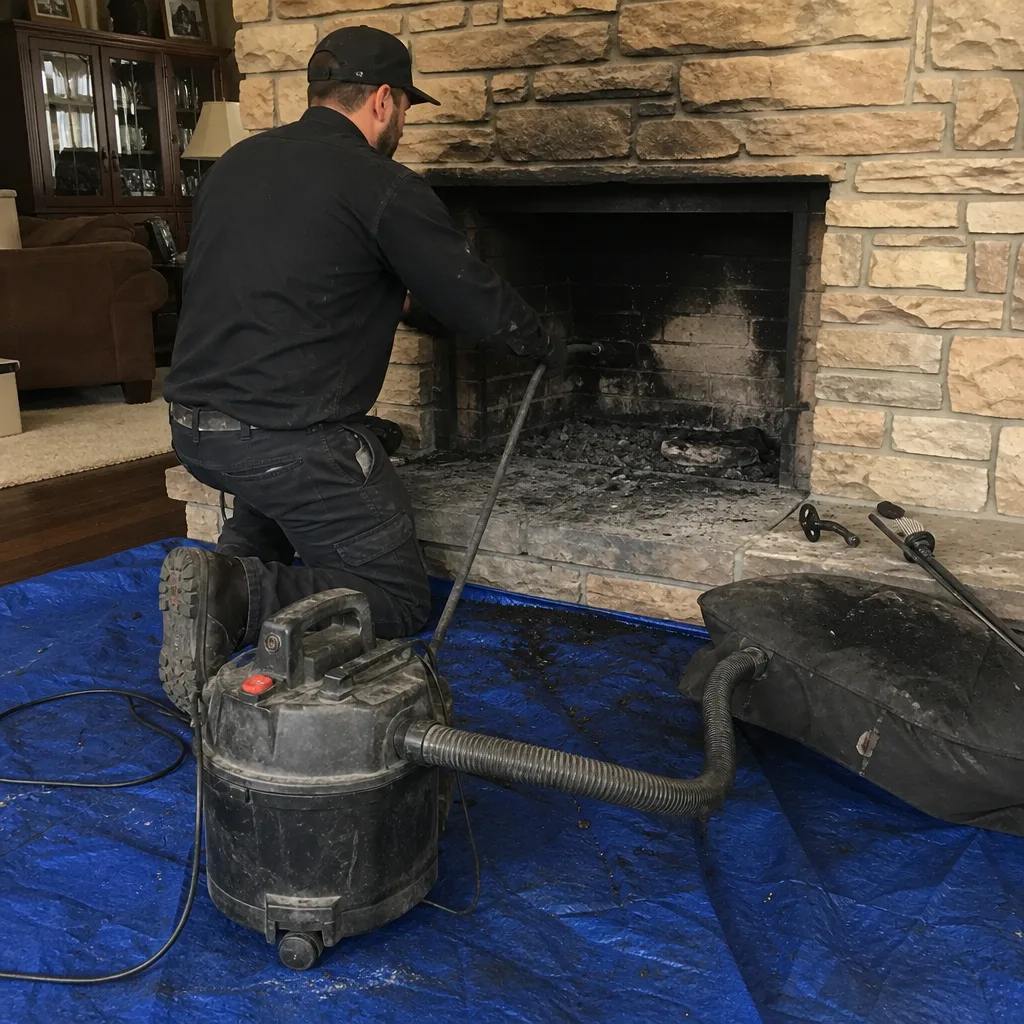 Before
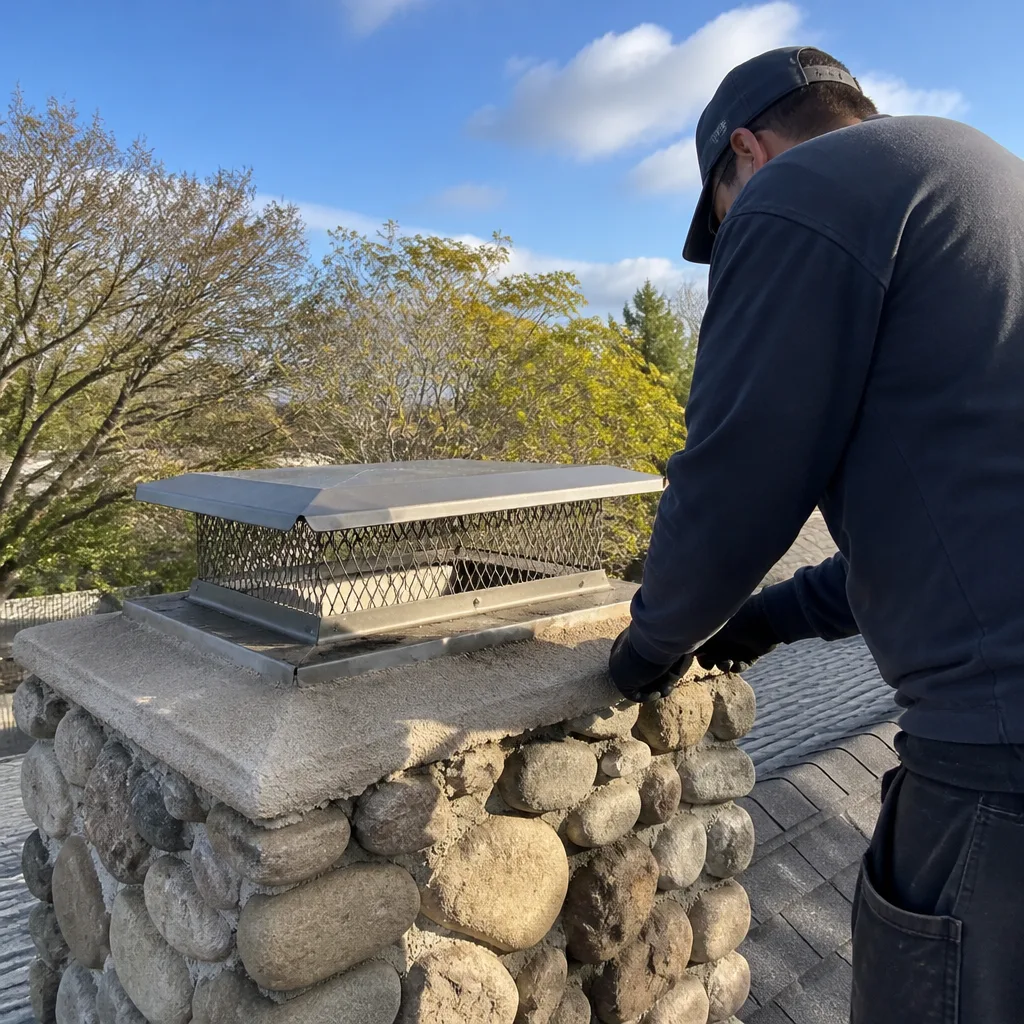 After
After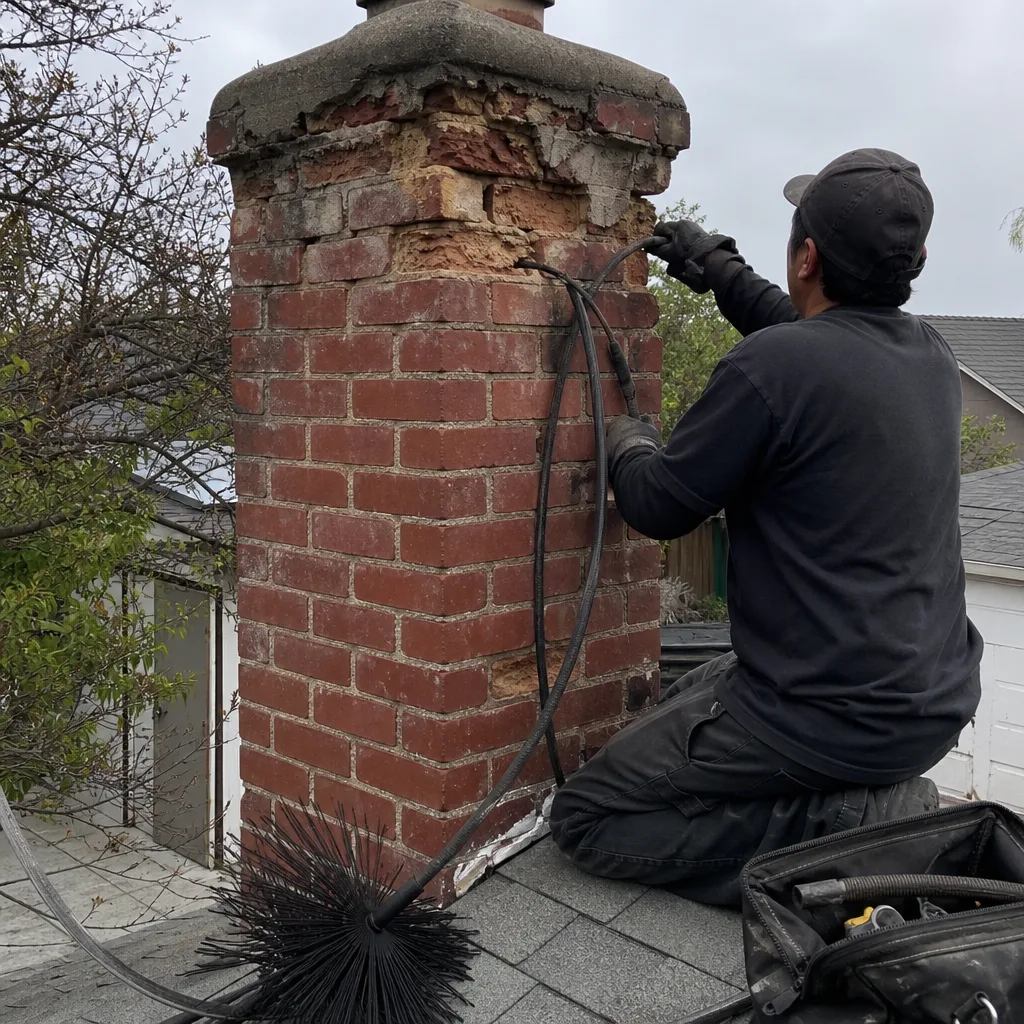 Before
 After
After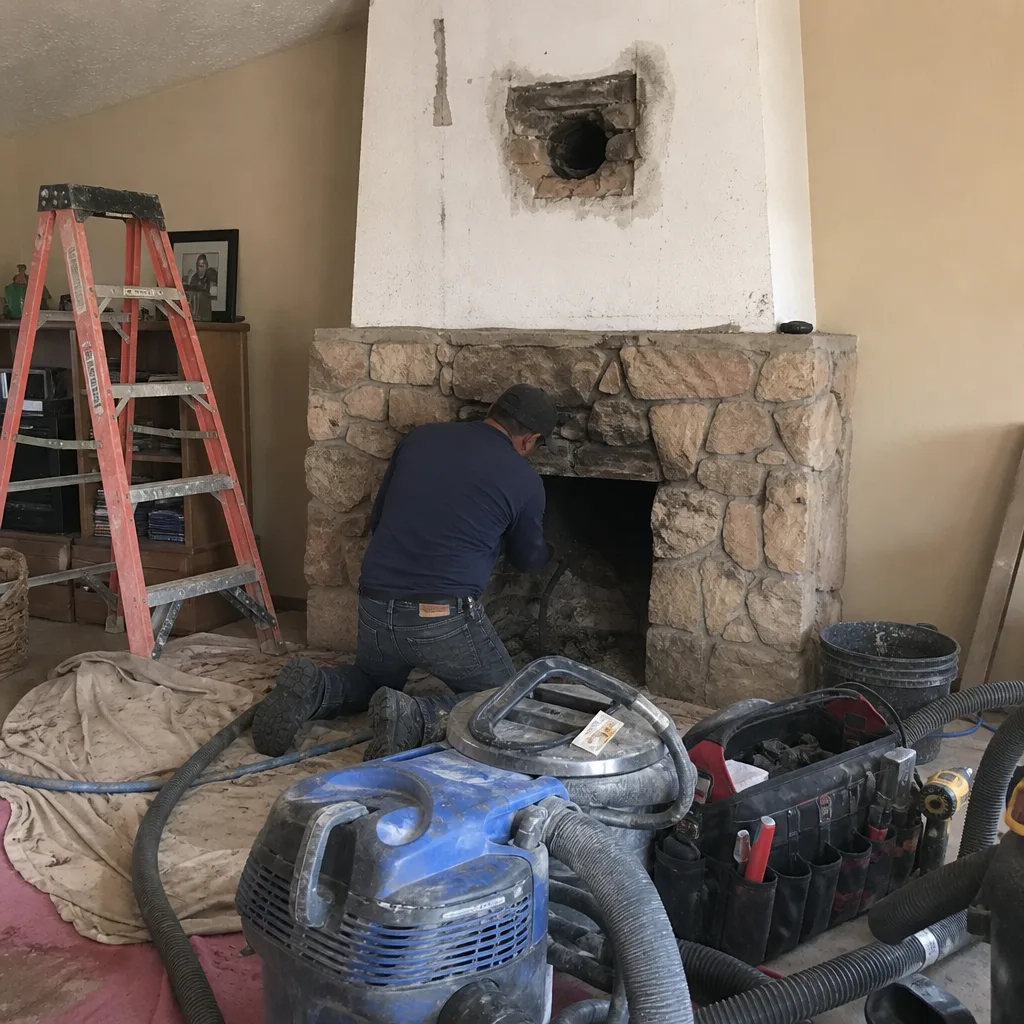 Before
 After
AfterWhen to Call a Professional
Call a chimney professional when you see any of the structural signals listed above: cracked or missing flue tiles, shiny or tarry creosote, visible smoke in the room during a burn, a seized damper, or efflorescence with spalling. Call especially soon if you hear animals in the chimney or if the smell of smoke persists in the house when no fire has burned for weeks. Alcott Chimney Fresno home page has our full service details, and we offer free estimates throughout Fresno. Call (559) 215-1714 and a live person will answer – day or night.
Frequently Asked Questions
A standard chimney sweep in Fresno typically runs $189 to $289, depending on the condition of the flue and the level of creosote present. If the chimney has Stage 2 or Stage 3 creosote, the price increases because rotary cleaning and possibly chemical treatment are required. Alcott Chimney Fresno gives you a written price before any work begins, so the price you’re quoted is the price you pay. Call (559) 215-1714 for a free estimate.
A chimney that burns wood more than twice a month through the Fresno winter season should be swept once a year, and the best time is early fall before the first burn. If you burn weekly, consider a mid-season inspection as well. The rule is based on creosote accumulation – not just the calendar – and the only way to know for certain is a camera inspection of the flue.
A new liner is necessary only when the existing liner is cracked, deteriorated, or missing. You should always be shown the camera footage before you agree to a liner replacement. If a sweep company refuses to show you the evidence, that’s a red flag. Alcott Chimney Fresno shows you the camera inspection results for every service, so you can see the problem with your own eyes before spending a dollar on repairs.
The creosote accumulates, the flue narrows, and the risk of a chimney fire increases with every burn. Over time, cracks from previous creosote fires (even small ones) can open paths for heat and gas to reach the home’s framing. The cost of a sweep is a fraction of the cost of even a minor chimney fire, and the insurance headache after a chimney fire exceeds both. We’ve seen Fresno homes where a $250 annual sweep would have prevented a $15,000 liner replacement and masonry repair.
Fresno is part of the San Joaquin Valley Air Pollution Control District, and wood burning is sometimes restricted during winter days when air quality is poor, especially on “No-Burn” days. You should check the current burn status through the Air District before lighting a fire. A well-maintained, properly swept chimney burns cleaner and produces fewer particulates, but the burn restrictions still apply on declared days.
That smell is almost always a sign of Stage 3 creosote off-gassing. The heat of a Fresno summer afternoon warms the flue enough to release volatile compounds from the hardened creosote, and the smell drifts down into the living space. It needs professional removal – this is exactly the kind of problem that gets worse the longer it’s ignored. Call (559) 215-1714 for an assessment, and you’ll get a straight answer about whether a sweep is all you need or whether a deeper treatment is required.
The Bottom Line
A chimney maintenance checklist only works if it teaches you what to look for, not just when to look. Start at the firebox and work your way up, checking each point for the specific normal and abnormal conditions described in this guide. Pay attention to your nose and ears – they catch problems your eyes can’t reach. Document what you find, twice a year, in a simple log. And when you find something you can’t safely assess or fix, call Fresno’s Chimney Sweep in Fresno professionals who show their work. Alcott Chimney Fresno has served Fresno homeowners since 2002, and every technician is announced by name and photo before arrival, with a written price before the work starts and a 365-Day Done Right Promise on every job. Call (559) 215-1714 to schedule your next sweep or inspection.
Written by Ruben Castellano, Owner at Alcott Chimney Fresno, serving Fresno since 2002.